
Stopping Damage Before It Spreads Further
Asphalt Repair in South Portland for cracking, surface deterioration, depressions, and pavement showing structural damage
Water penetration through small cracks is what turns minor surface damage into expensive structural failure across Maine driveways and parking areas. Toothy Sealcoating evaluates asphalt damage in the Greater Portland Area and recommends repair methods that address the actual cause rather than just covering visible symptoms. Freeze-thaw cycles expand water trapped in cracks and voids, heavy traffic stresses weakened areas, and aging pavement loses flexibility, which all combine to create the cracking and deterioration you see at the surface.
Minor damage like hairline cracking, surface spalling, and small depressions can be corrected with targeted repairs that restore structural integrity and prepare the pavement for sealcoating. Larger failures involving base movement, deep cracking, or widespread deterioration require more extensive work, including removing damaged material and rebuilding the affected section. The evaluation process identifies how deep the damage extends and whether the base material underneath has been compromised.
Arrange an on-site evaluation to determine what repair approach your pavement condition requires.
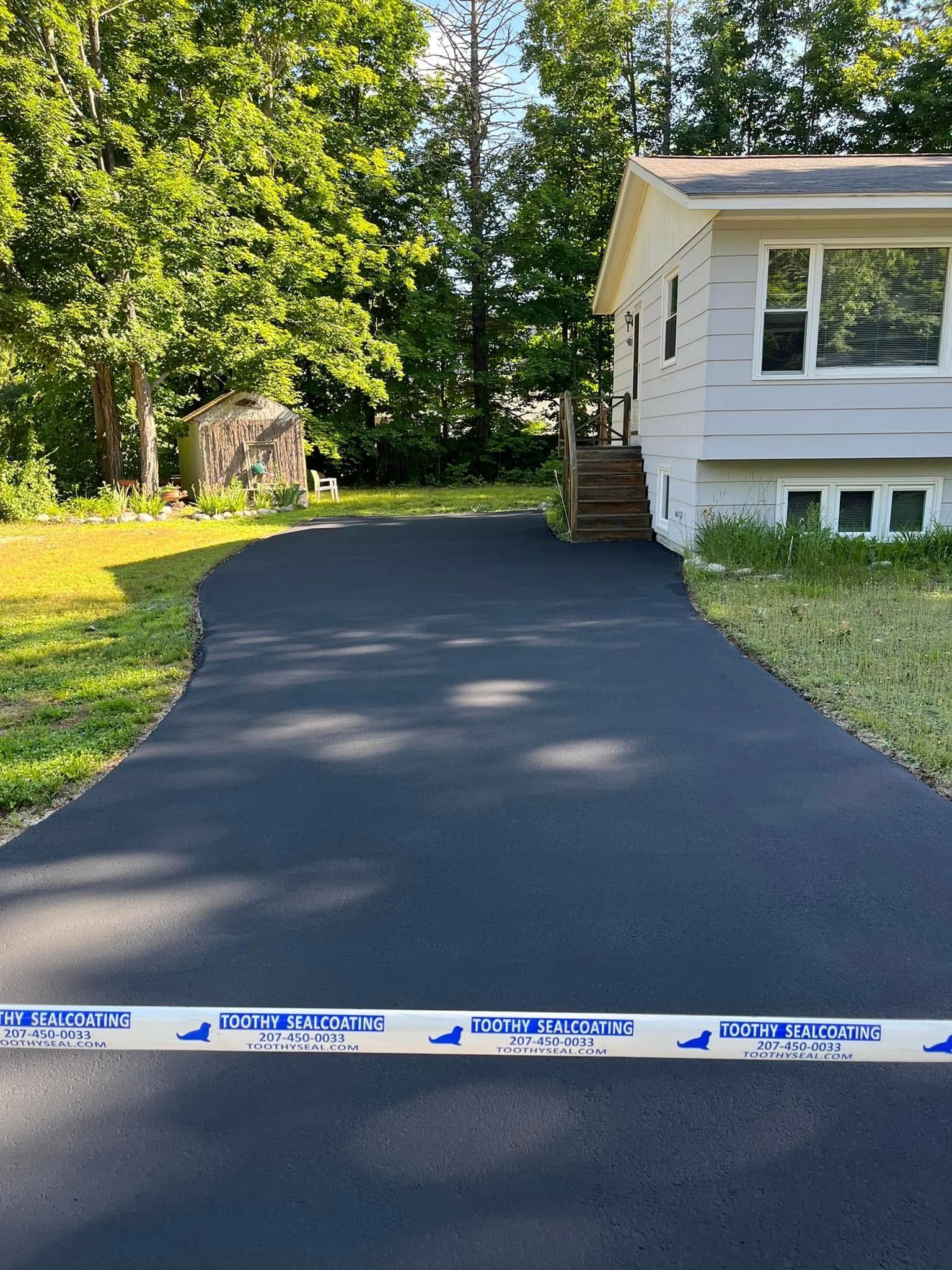
How Asphalt Repair Addresses Deterioration
Effective repairs start by removing all loose and deteriorated material so the repair bonds to solid asphalt rather than sitting on top of crumbling edges. Crack routing widens narrow cracks to create space for rubberized filler that moves with seasonal expansion and contraction, and deeper voids get filled with hot or cold patch material depending on the extent of damage. Surface preparation determines whether the repair holds for years or fails within months.
Once repairs are completed, the pavement surface becomes level again, water no longer pools in depressions where it can freeze and expand, and cracks stop widening during temperature swings. Toothy Sealcoating focuses on repairs that restore both appearance and structural soundness, which means you won't see patched areas continuing to settle or crack edges continuing to spread outward after the work is finished.
Repairs must cure and compact fully before sealcoating is applied, because sealing over fresh patches that haven't stabilized can trap moisture and cause premature coating failure. Addressing damage early prevents water from reaching the base layer, which is where the most costly deterioration occurs and where repair costs increase significantly once base failure begins.
What Property Owners Usually Ask
Customers facing asphalt damage often have questions about what needs to be fixed, how repairs are performed, and when intervention is necessary.
What causes asphalt to crack and deteriorate?
Water infiltrates small surface cracks, freezes during Maine winters and expands to widen those cracks, then thaws and allows more water to penetrate deeper into the base, while UV exposure and oxidation make the asphalt brittle and less able to flex with temperature changes.
How do you determine what repair method to use?
The evaluation examines crack width and depth, checks whether edges are stable or crumbling, tests for base movement underneath damaged areas, and identifies whether deterioration is limited to the surface or extends into structural layers below.
Why should minor damage be repaired quickly?
Small cracks allow water to reach the base material where freeze-thaw damage undermines structural integrity, and once base failure begins, the repair scope increases from simple crack filling to removing and replacing entire sections of pavement.
What happens after repairs are completed?
Patched areas are compacted and leveled to match surrounding pavement, the surface is cleaned of debris, and once the repair material has cured fully, the entire area can be sealcoated to protect both old and new asphalt uniformly.
How does repair work with future sealcoating?
Properly executed repairs create a solid, uniform surface that allows sealant to bond evenly across the entire pavement, which prevents coating failure at patch edges and ensures the protection layer performs as intended for two to three years.
Toothy Sealcoating prioritizes long-lasting repair methods and recommends only the work your pavement actually needs to remain functional and protected. Schedule an inspection to address visible damage before water infiltration leads to base failure and replacement-level costs.